
The "Micro-Budget" Trap
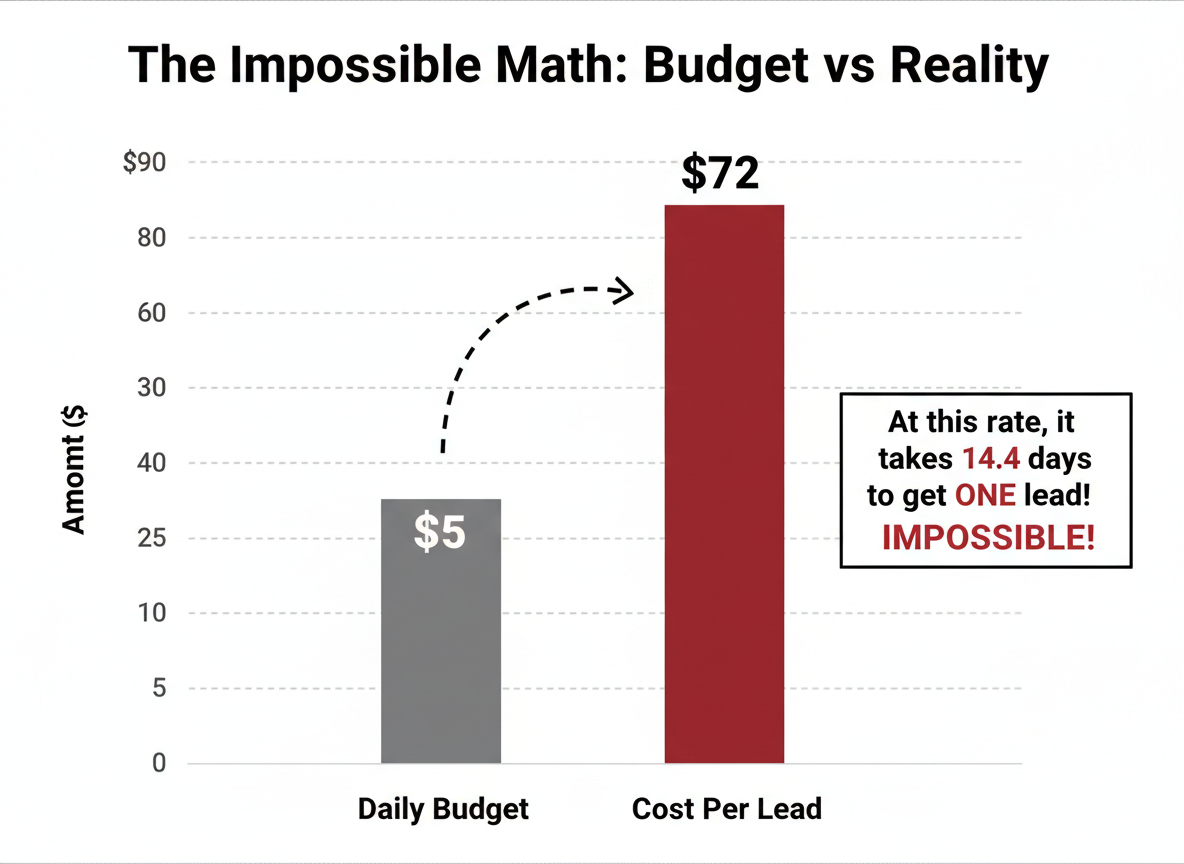
How a local gutter company retreated to a $5/day budget and accidentally created a $72 cost-per-lead

The "Retreat" Strategy
The client didn't start at $5.00/day. They originally funded the campaign at a healthy level. But after months of seeing high costs and getting "junk" calls from DIYers, they panicked.
Instead of fixing the engine, they cut the gas. They slashed their spend to $5/day to "stop the bleeding." They didn't realize that by starving the algorithm, they were actually guaranteeing failure.
Why the Campaign Failed
The Starvation Cycle
They used "Maximize Leads" bidding (AI) on a micro-budget. The AI needs data to learn. With only $5, the system shut down by noon every day.
Ghost Tracking
Lead forms weren't tracking. The client was making financial decisions based on zero data. They felt the ads "weren't working," but they were flying blind.
The Broad Match Bleed
To find cheap clicks, Google forced ads into generic searches like "Gutter repair parts." 94% of traffic was from DIYers, not buyers.
The Midnight Drain
Ads ran 24/7. Clicks at 2:00 AM don't convert for local service businesses. This was pure wasted spend.
The Turnaround Plan
We provided a prioritized roadmap to fix the profitability issues immediately so they could scale back up.
Switch to Manual CPC
On a small budget, you must dictate the price, not Google. We took control back from the AI.
Fix the Tracking
We repaired the Google Tag Manager code. You cannot scale what you cannot measure.
The "Business Hours" Rule
We cut nights and weekends to focus 100% of the budget on times when customers actually answer the phone.
Retreating Doesn't Fix the Problem
This client believed Google Ads "didn't work." The truth? You can't drive a Ferrari with a thimble of gas. If your costs are high, let me look under the hood to find out why.

CONTACT
FOLLOW US

© 2026. Lone Star Ad Group. All Rights Reserved.